
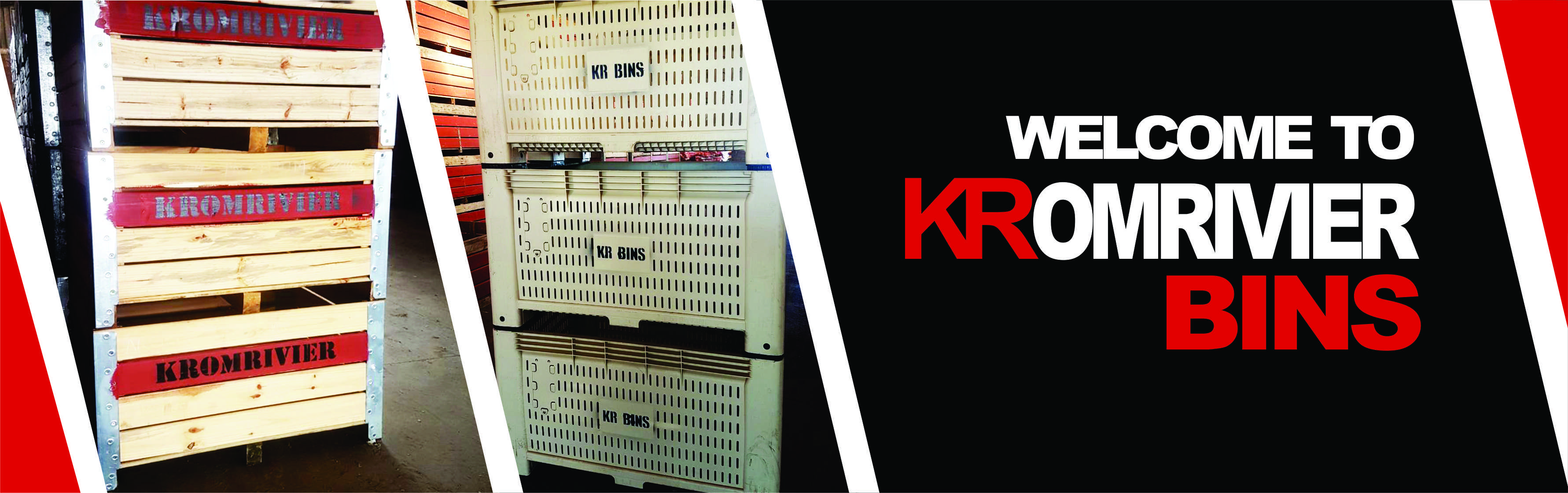
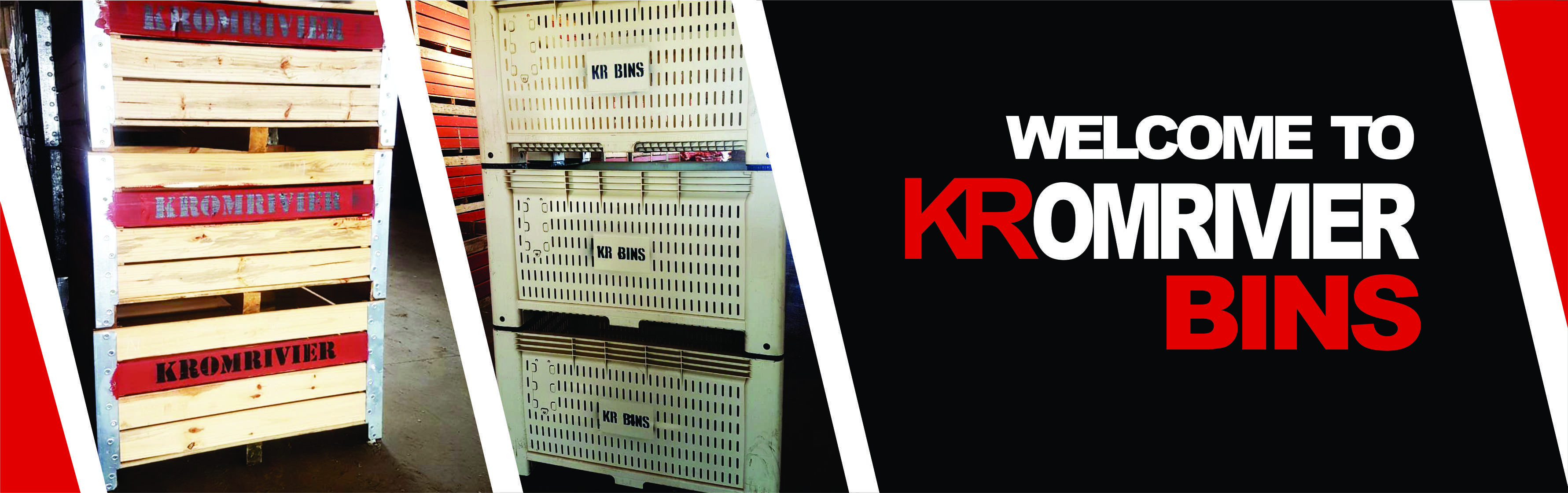
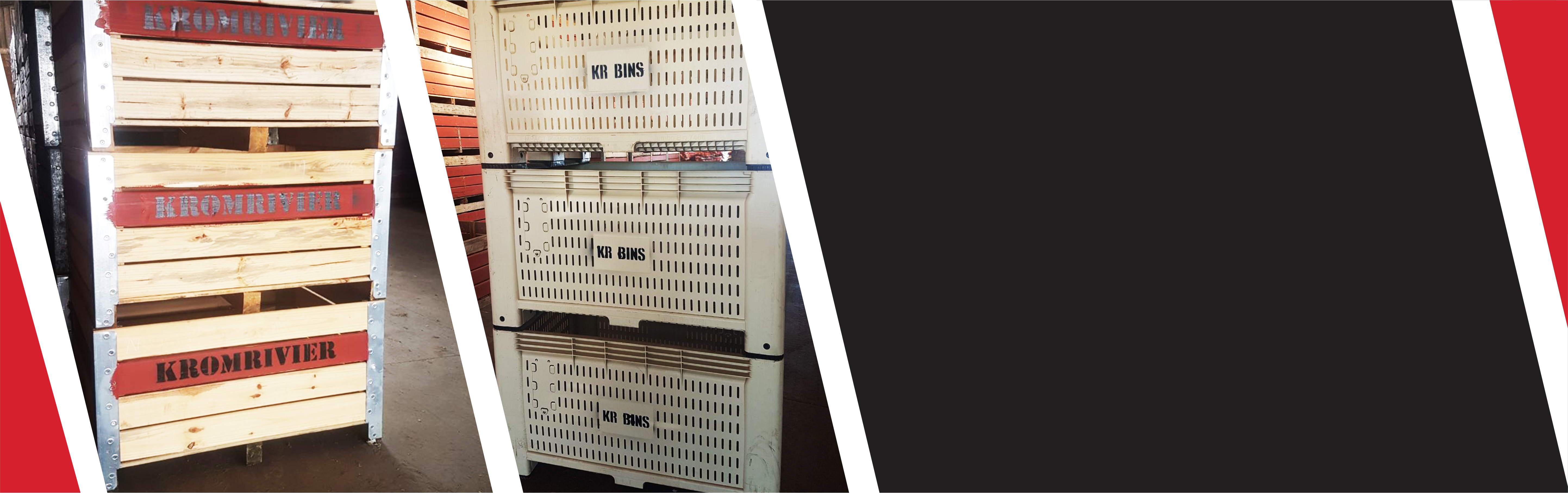
WELCOME TO KROMRIVIER BINS
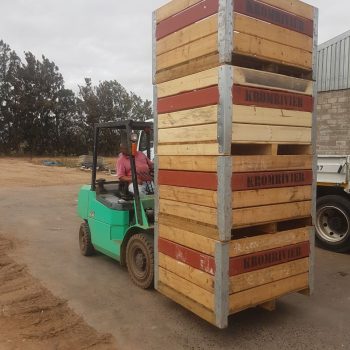
Kromrivier Bins is situated near Cape Town in the Agter-Paarl Region, Western Cape South Africa, has been renting wooden and plastic bulk bins. The wooden bulk bin container, designed in the late sixties, has proven to be the most practical and easiest way to move fruit and vegetables from farm orchards and land to the warehouse and factory.
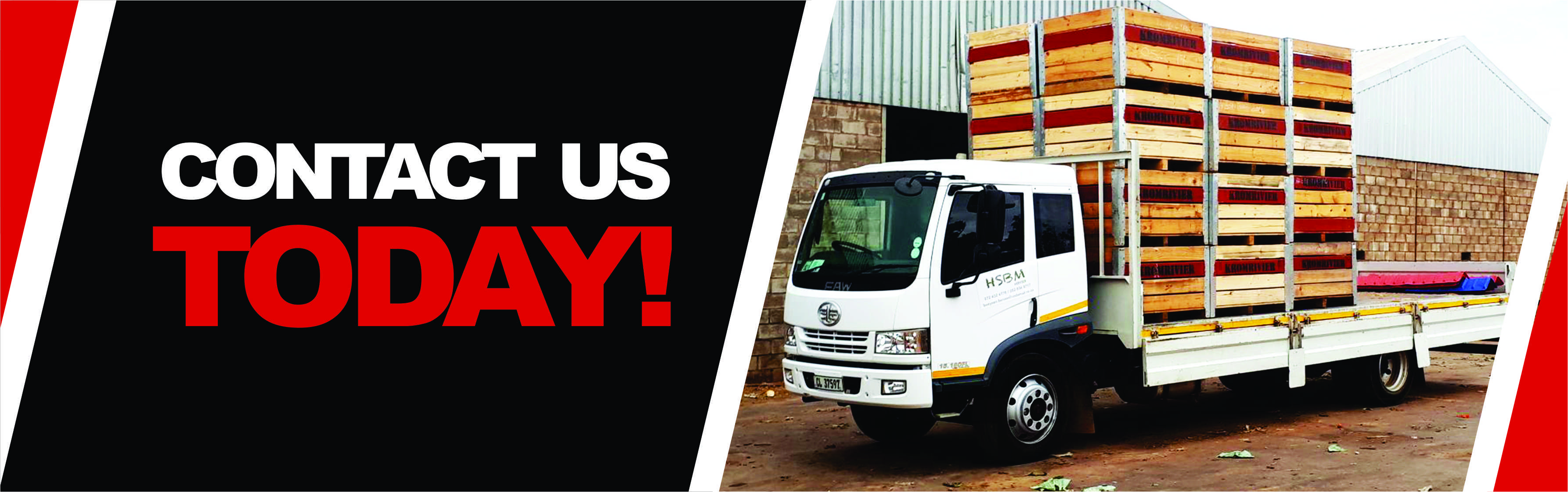
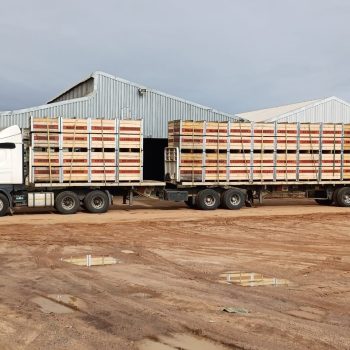
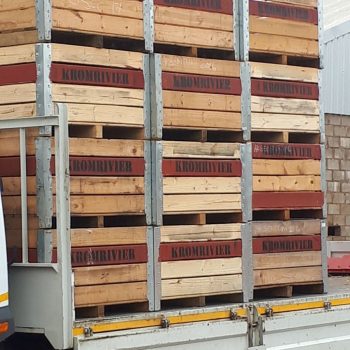
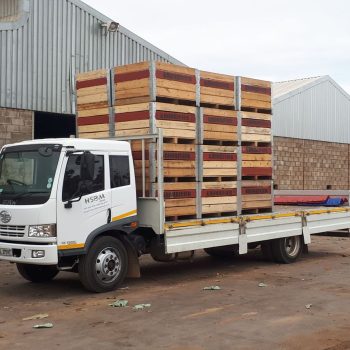
Wooden bins are the preferred choice because it is more economical, easier to repair and more durable compared to other types of containers. Kromrivier Bins can provide transport for bulk bins and service for industry in the Western Cape and Boland areas near Cape Town including the farming communities of Wellington, Ceres, Worcester, Ashton, Franschhoek, Paarl, Stellenbosch, Somerset West and all areas within 200 km radius of Wellington South Africa.

contact us if you have any questions concerning wood or plastic bulk bins
WHAT WE OFFER
Rental Standard Bulk Bins
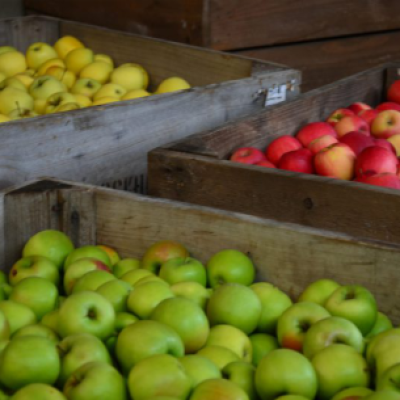
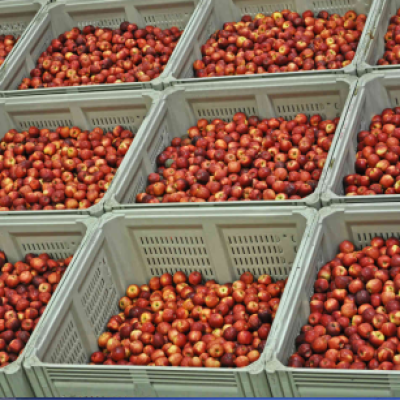
Bulk Bins in the Fruit Growing Industry
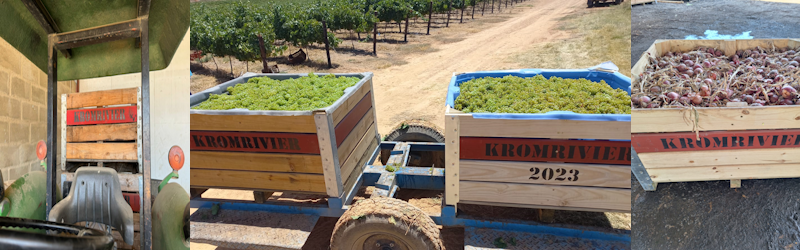
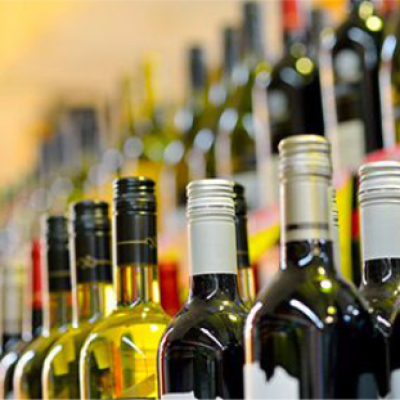
Bulk Bins in the Agriculture and Wine Industry
Bin Repairs


THE AIM FOR OUR COMPANY
Our aim is to supply the best quality wooden and plastic fruit, vegetables, agriculture and wine, bins in the Western Cape area to all stakeholders in the fruit, agriculture and wine industry .
OUR VISION
Our vision is to supply good quality wooden and plastic bulk bins to agriculture and wine industry and deliver utmost service to all our customers.
It is estimated that the South African agricultural industry has a total pool of about 2.7 million jumbo bins in use. Indications are that citrus fruit are almost exclusively transported in plastic bins while apples and pears each are using about half wooden bins and half plastic bins. Extensive research has been done in this industry regarding which of these, wood or plastic, are a better option for fruit growers. More than 20 years ago, in 192, Alan F. Hauff did a presentation at the Washington Tree Fruit Postharvest Conference of a study he had done on the potential of collapsible plastic bins that could be used for both storage and shiping of fruit. The study included in-depth market research and comparisons between standard wood bins and plastic bins considering the strengths and weaknesses of each; informed by industry representatives, other researchers and manufacturers. It would come to be regarded as a seminal work in this field.
Much of this research focused on the Bolzano region, a major fruit growing area in Italy where plastic bins had already been introduced in the 1970’s. The research included site visits to; plastic bin manufacturers, commercial storages (using only wooden bins, only plastic bins and those using both kinds) in order to discover advantages and disadvantages of both, reasons for changing from wood to plastic, or reasons to stay with wooden bins. Information was also obtained from other Researchers and extension personnel about the use of plastic bins. Hauf found that the Fruit Growers in this region had not only tried plastic bins as an alternative to wood bins, they were consciously and methodically working towards completely changing to plastic bins. The research conducted by Hauff is still regarded as a seminal work in the study of large capacity bins. Over the last 3 decades much of his research has been confirmed by other research, showing that the factors that influenced bin choice decades ago are just as valid today.
When choosing the right bin for crops, it needs to be considered from the perspective of how it will or will not affect the fruit. Fruit and vegetables are living parts of plants that contain anything from 65 – 95 percent water and continue their living processes after being harvested. The post-harvest life-span of the fruit is determined by the rate at which their stored food reserves are used up and by the rate of water los. Once these are exhausted, the fruit decays and dies.
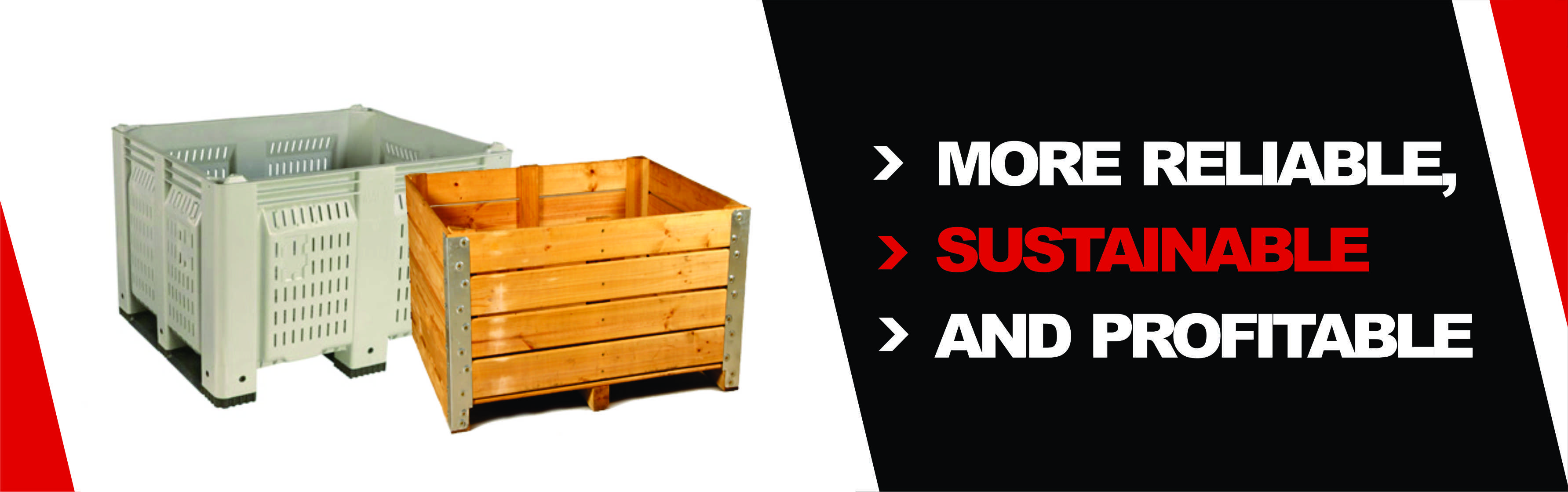
Our bulk bins is a more reliable, sustainable and profitable plastic alternative to the wooden bin traditionally used in the agricultural industry, and is considered by many to be the best quality bulk bin in the world, available at the lowest possible cost.
It was introduced in North America and Australia 20 years ago and has been in great demand ever since, particularly in the fruit industries of those regions, where it has become virtually the only bin used.




It is estimated that the South African agricultural industry has a total pool of about 2.7 million jumbo bins in use. Indications are that citrus fruit are almost exclusively transported in plastic bins while apples and pears each are using about half wooden bins and half plastic bins. Extensive research has been done in this industry regarding which of these, wood or plastic, are a better option for fruit growers. More than 20 years ago, in 192, Alan F. Hauff did a presentation at the Washington Tree Fruit Postharvest Conference of a study he had done on the potential of collapsible plastic bins that could be used for both storage and shiping of fruit. The study included in-depth market research and comparisons between standard wood bins and plastic bins considering the strengths and weaknesses of each; informed by industry representatives, other researchers and manufacturers. It would come to be regarded as a seminal work in this field.
Much of this research focused on the Bolzano region, a major fruit growing area in Italy where plastic bins had already been introduced in the 1970’s. The research included site visits to; plastic bin manufacturers, commercial storages (using only wooden bins, only plastic bins and those using both kinds) in order to discover advantages and disadvantages of both, reasons for changing from wood to plastic, or reasons to stay with wooden bins. Information was also obtained from other Researchers and extension personnel about the use of plastic bins. Hauf found that the Fruit Growers in this region had not only tried plastic bins as an alternative to wood bins, they were consciously and methodically working towards completely changing to plastic bins. The research conducted by Hauff is still regarded as a seminal work in the study of large capacity bins. Over the last 3 decades much of his research has been confirmed by other research, showing that the factors that influenced bin choice decades ago are just as valid today.
When choosing the right bin for crops, it needs to be considered from the perspective of how it will or will not affect the fruit. Fruit and vegetables are living parts of plants that contain anything from 65 – 95 percent water and continue their living processes after being harvested. The post-harvest life-span of the fruit is determined by the rate at which their stored food reserves are used up and by the rate of water los. Once these are exhausted, the fruit decays and dies.
Our bulk bins is a more reliable, sustainable and profitable plastic alternative to the wooden bin traditionally used in the agricultural industry, and is considered by many to be the best quality bulk bin in the world, available at the lowest possible cost.
It was introduced in North America and Australia 20 years ago and has been in great demand ever since, particularly in the fruit industries of those regions, where it has become virtually the only bin used.
OUR PRODUCTS
WOODEN & PLASTIC BINS
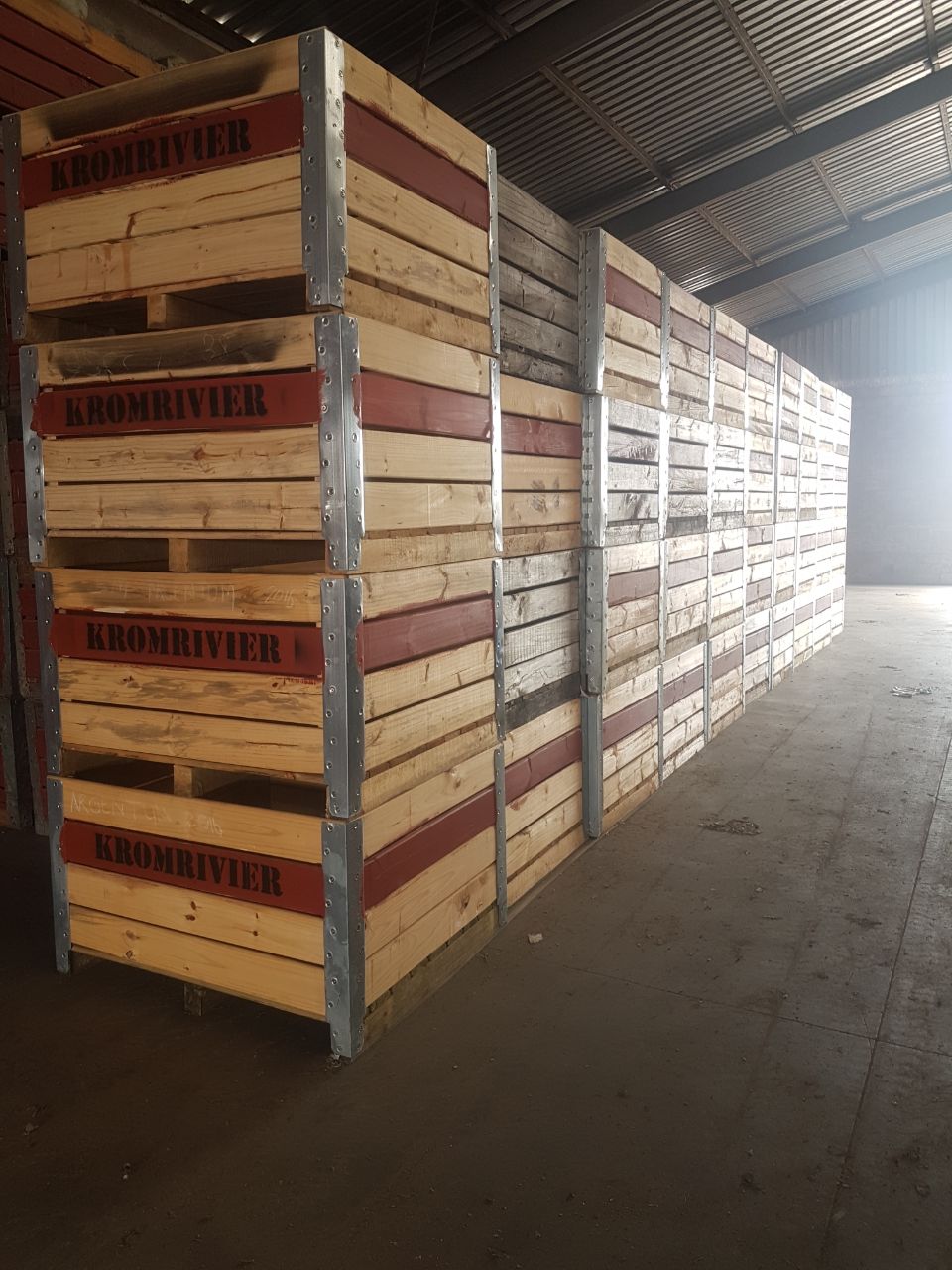
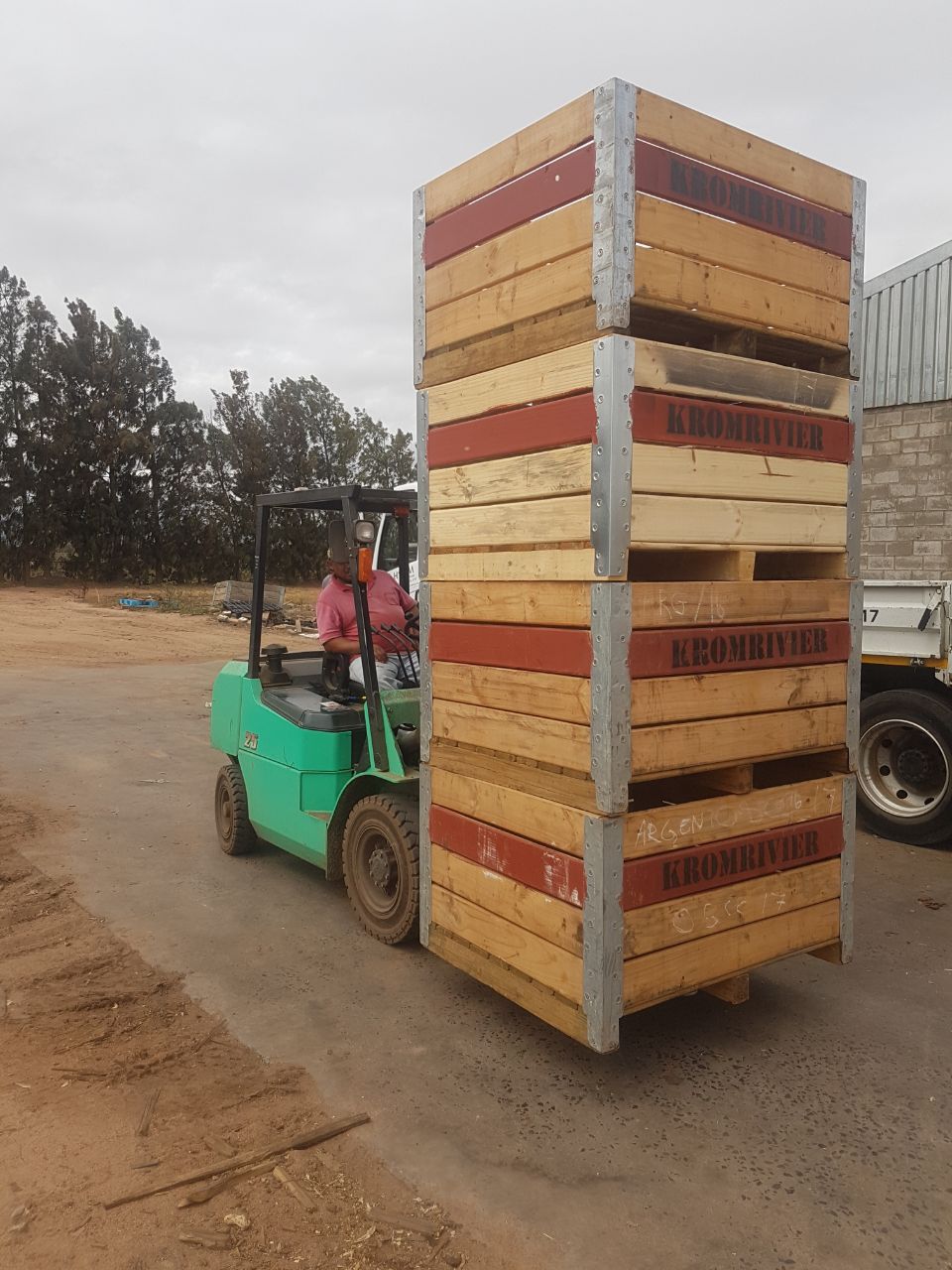
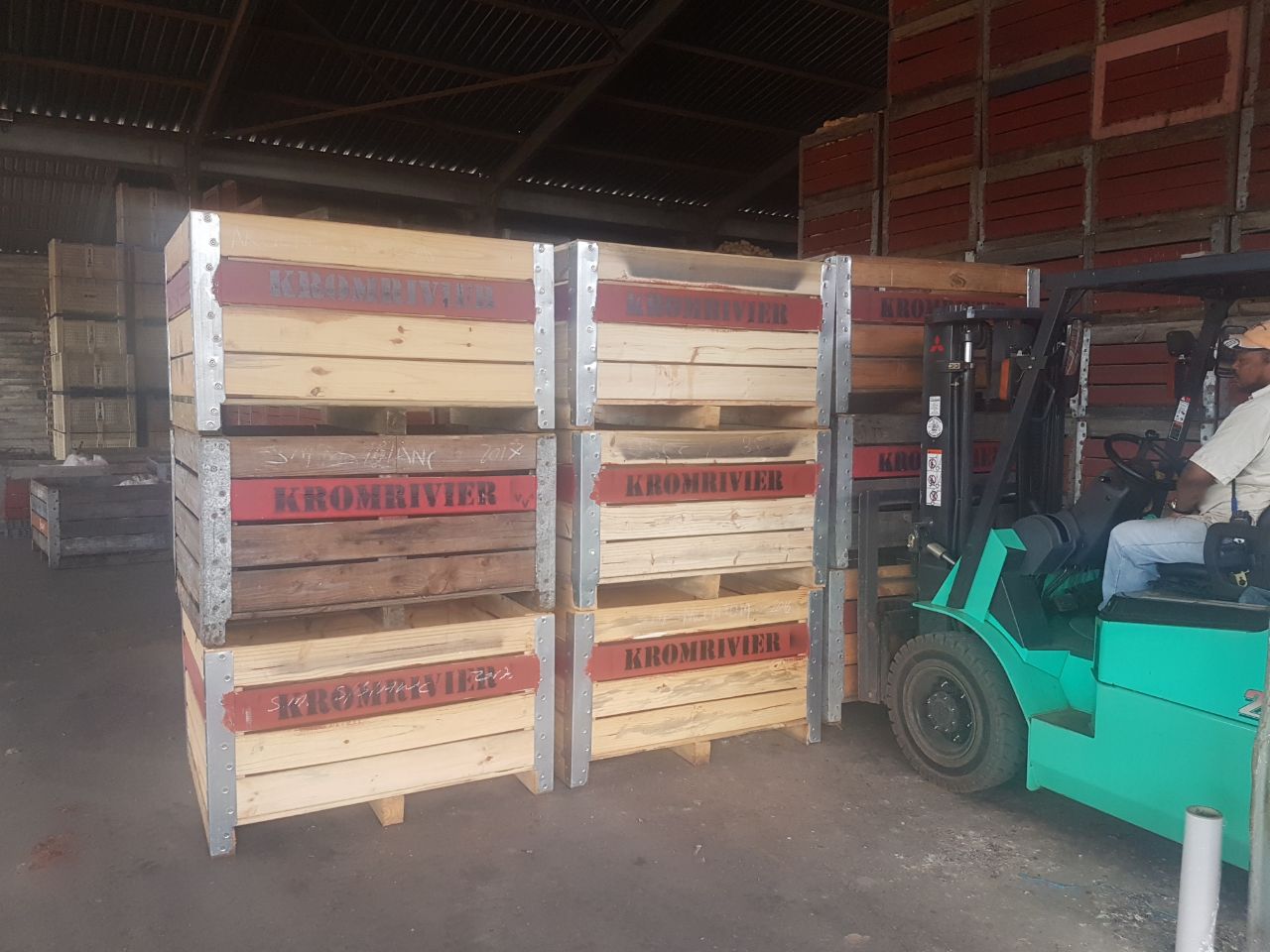
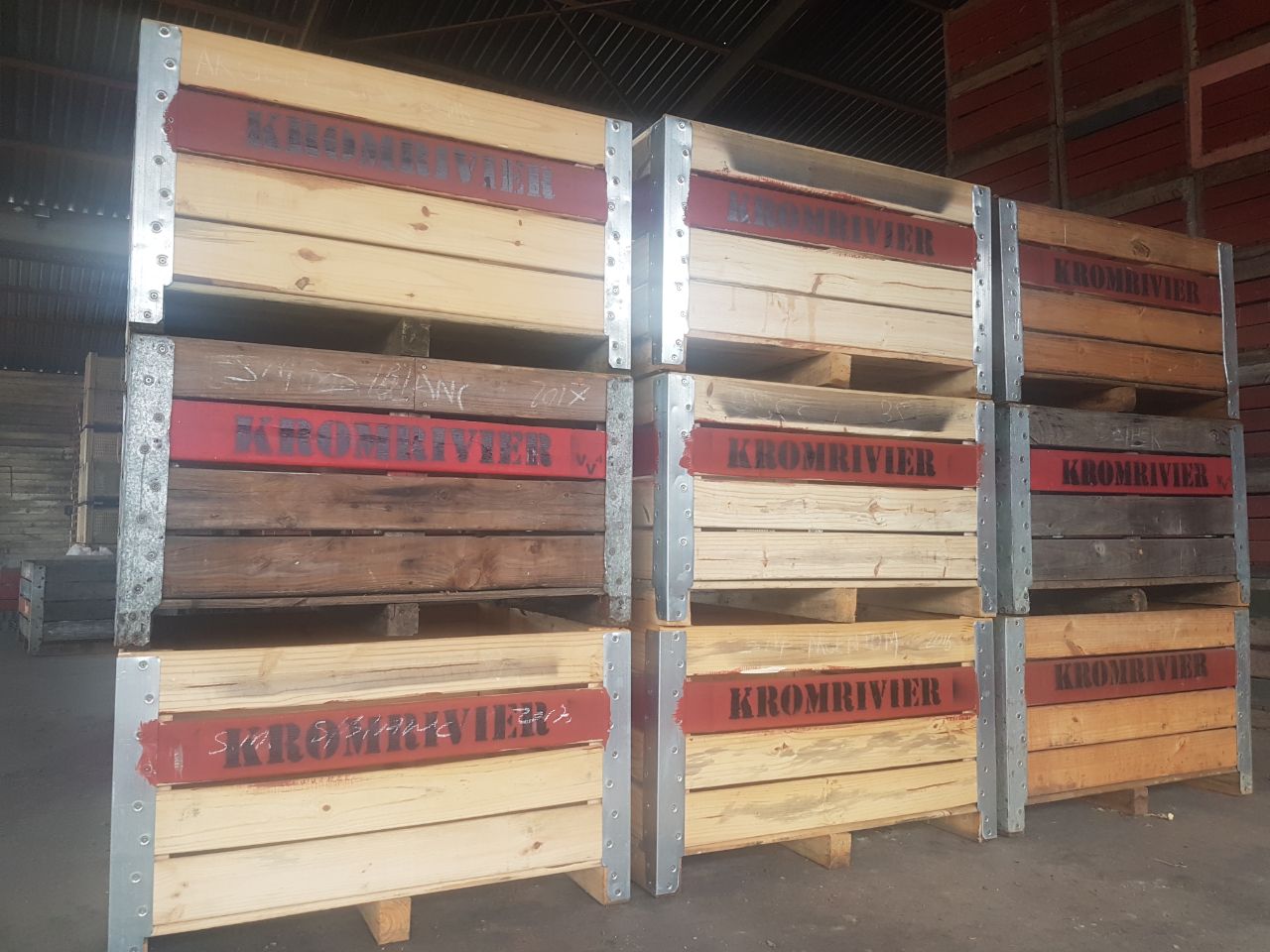
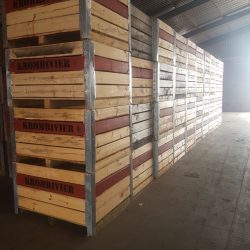
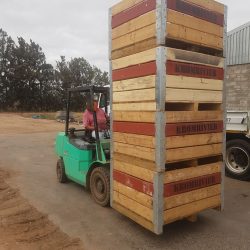
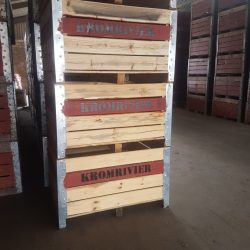
WOODEN BINS
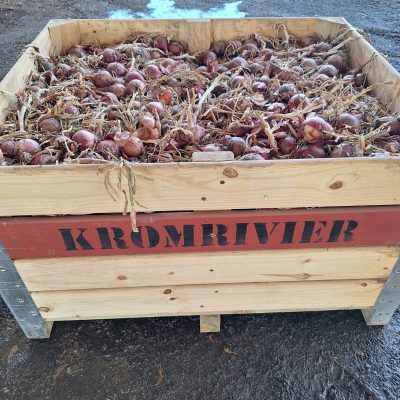
The bins are made out of SA Pine, assembled with thick shaft screws and strengthened with galvanizes steel corner pieces that is 1,2mm thick.
Bin outer dimensions : 1270L x 1070W x 727H (mm)
± Bottle capacity of wooden bin for wine industry.
750ml:
Claret = 480 bottles
Burgundy = 464 bottles
Vonkel = 364 bottles
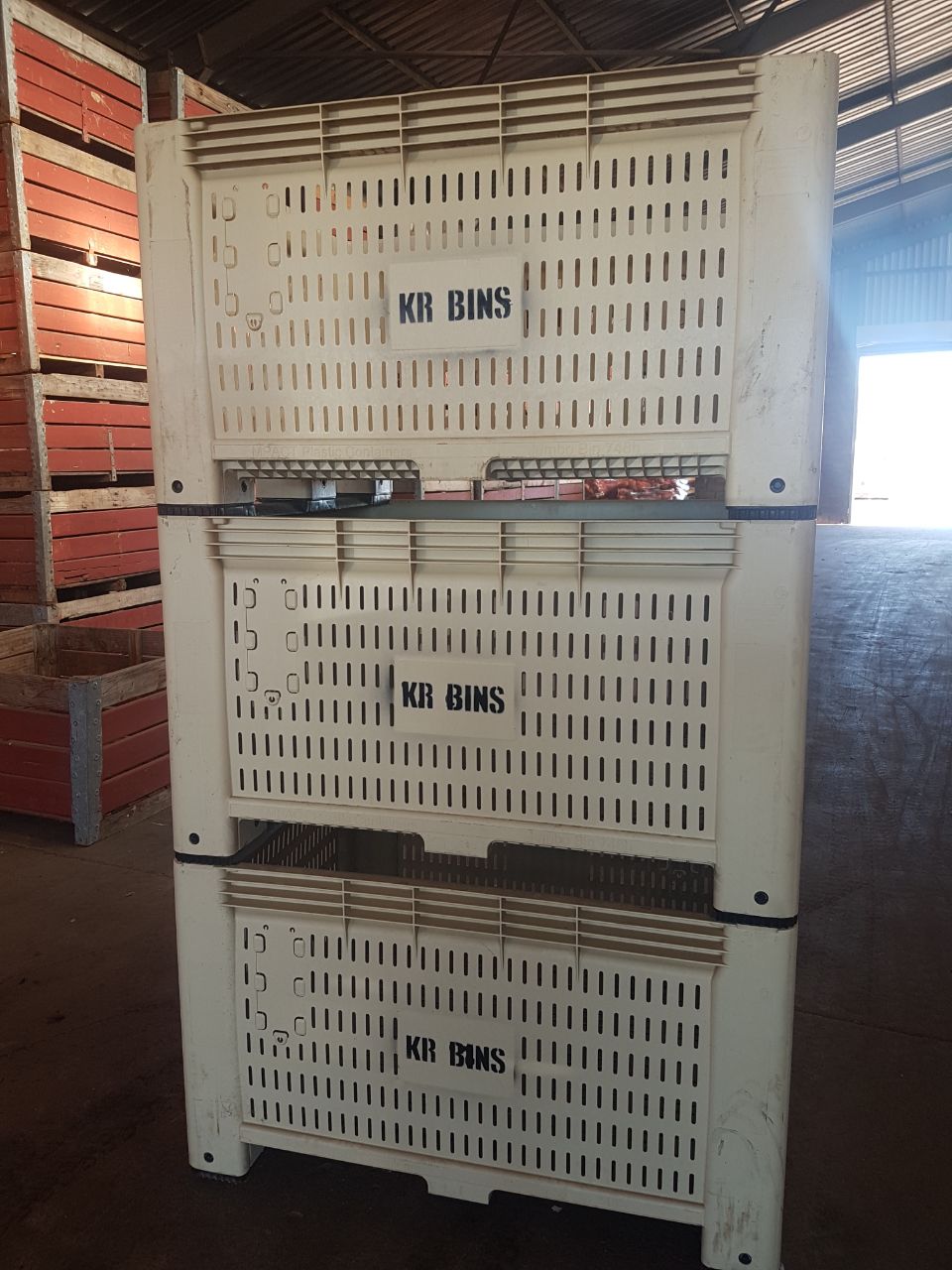
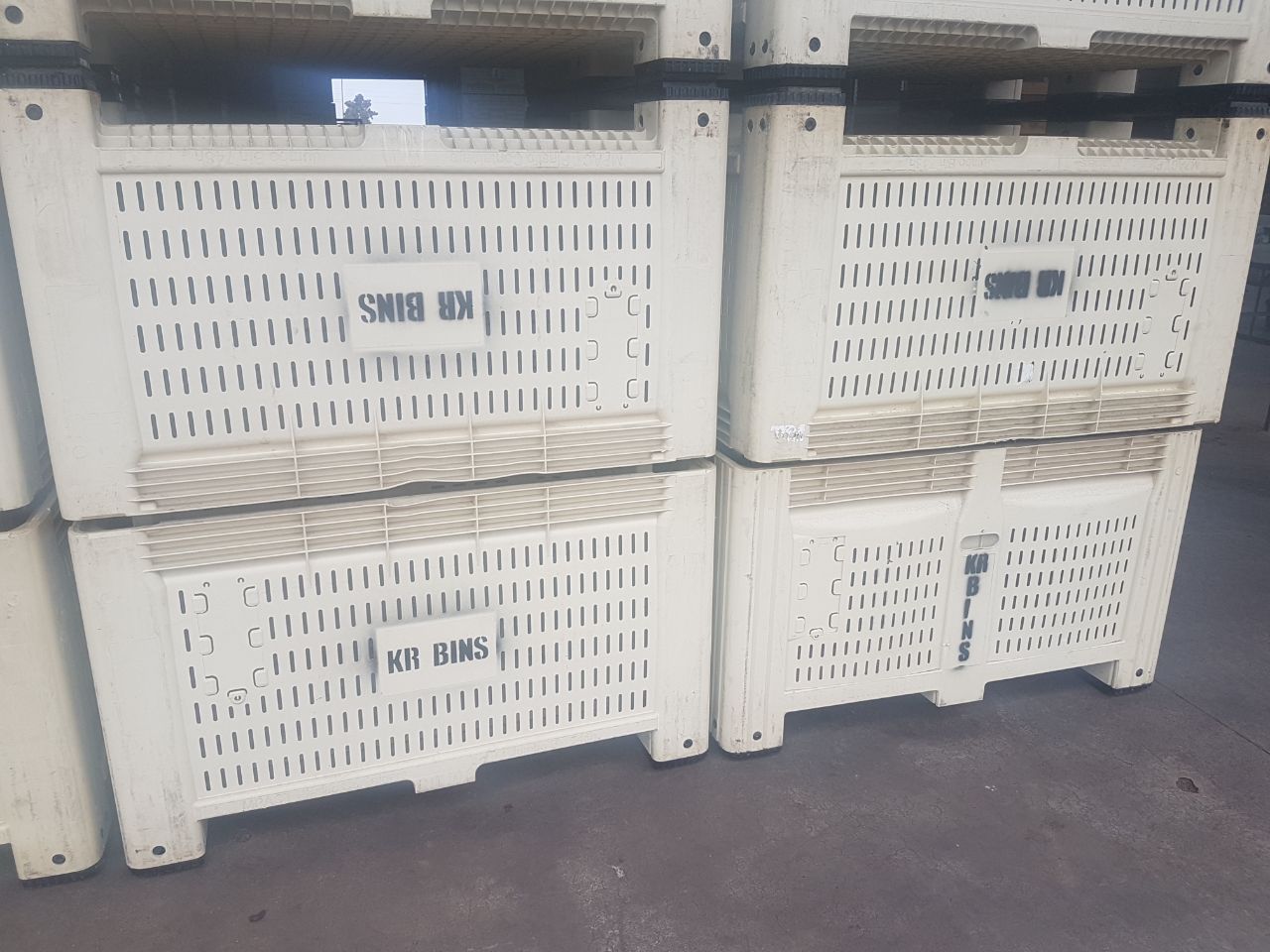
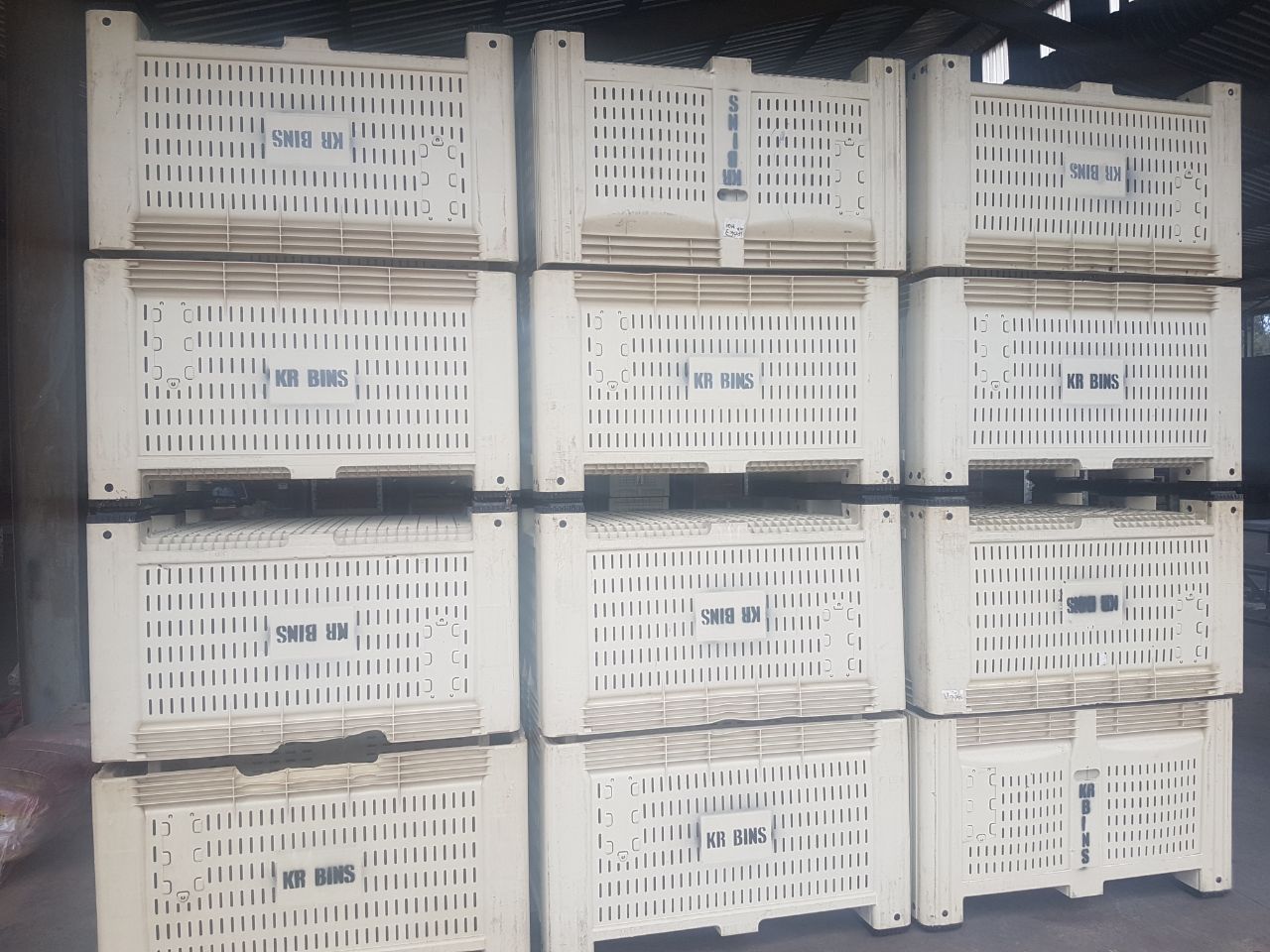
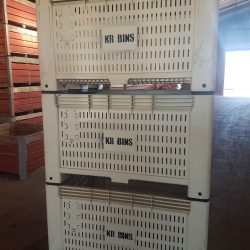
PLASTIC BINS
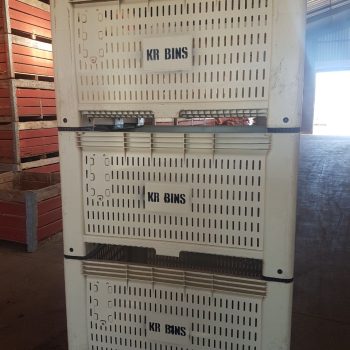
The bins are made of impact modified Polypropylene.
Bin outer dimensions : 1276L x 1076W x 748H (mm)

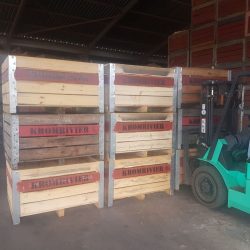

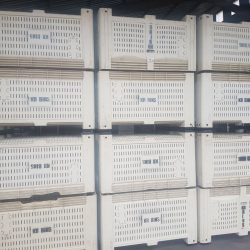

WOODEN BINS vs PLASTIC BINS

Kromrivier Bins does not hold a License to carry Regulated Waste with the Department of Environment and Heritage Protection (EHP).
No regulated waste permitted eg: – asbestos fibro, tyres, dangerous goods (fuel, chemicals, oil).
- Keep all rubbish confined in bin, do not overload.
- Kromrivier Bins will not be responsible for any damage to clients property if the bin is placed according to hirer’s instructions.
- Should the driver become bogged in an area declared safe by the hirer, the hirer shall pay all costs associated with the recovery of the vehicle and any cost associated with returning the property to prior condition.
- Any bin(s) damaged while on site will be repaired and costs forwarded to the hirer.
- If bin is shifted from delivery position, no responsibility will be accepted for removal eg too close to buildings or on driveways.
- If bin is shifted from delivery position it is the hirer’s responsibility to return bin to the original delivery site in preparation for collection.
The Hirer is liable for all losses and damages to or accident involving bins whilst on hire to them. No asbestos in bins. Where the vehicle has to leave the public highway at the Hirer’s request, any damage to pavements, paths, gates, etc. Shall be the official Hirer’s responsibility.
IF YOU HAVE ANY QUESTIONS ABOUT OUR BIN HIRE, CONTACT US TODAY ON 021 869 8021
GET IN TOUCH WITH US
- Yolande: 082 821 1392
- Tommie: 082 466 7074
- Tel: 021 869 8021
- Email: yolande@kromrivier.co.za
- Coordinates: -33.677814, 18.783580